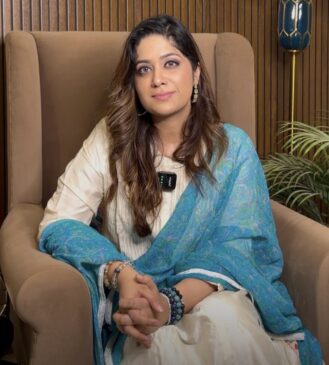
At Brilliant Read Media, it is our constant endeavour to identify and share some of the unique and compelling stories from the startup ecosystem. As part of this, we invited Madhurima Saigal for an interview with Brilliant Read Media. To say further, Madhurima is an NLP & Neuro-Somatic Practitioner, Identity Transformation Coach and Founder at Mystalya. Let’s learn more about her background, inspiring journey so far and her advice for our growing community!
Excerpts from our exclusive interview with Madhurima:
What inspired you to become a Neuro-Somatic and NLP coach, and how did your journey begin?
Honestly, I didn’t plan to become a coach. My journey began from a very real place — I was searching.
For two years, I worked in the energy space under a renowned practitioner. While my formal role was in marketing, something much deeper was unfolding within me. I was surrounded by transformation work, yet quietly navigating my own questions about purpose, recurring patterns, and the deeper mechanics of life.
What shifted everything for me was this realisation: it all begins with breath and thought. That was the first opening. From there, I went deeper — certifying as a trainer, facilitating sessions, studying emotional intelligence, NLP, and somatic practices. Slowly, it began to make sense — not just intellectually, but viscerally. I could feel it in my body.
“The answers I was looking for were never outside me. They were always in how my nervous system was responding to life.”
That’s when I knew. This wasn’t accidental. This was alignment. My work became helping others access that same shift.
Was there a specific moment when you knew coaching was your calling?
Yes — and it wasn’t dramatic. It was quiet.
During one of my early sessions, I was working with someone who had carried a lifelong belief of not being enough. In that space, something shifted. Not because I offered advice or fixed anything — but because their nervous system finally felt safe enough to release.
They cried. Then they laughed. Then they said, “I’ve never felt this before.”
That moment made me realise — this wasn’t surface-level coaching. This was identity-level transformation.
“I wasn’t fixing people. I was creating safety for them to meet themselves.”
That’s when I knew this was my calling.
Can you explain neuro-somatic coaching in simple terms?
Most of us live from the neck up. We analyse, strategise, and overthink — yet nothing fundamentally changes.
That’s because the body holds patterns the mind cannot access alone.
“Neuro” refers to the brain and nervous system — how we’ve been wired through childhood, stress, conditioning, and survival responses. “Somatic” means body-based — because your body stores and signals emotional experiences long before your mind processes them.
In simple terms:
We use the intelligence of the body to rewire the patterns of the mind.
We don’t endlessly analyse problems. We locate them in the body, allow them to be processed safely, and release them at the root.
“You don’t think your way to transformation. You feel your way there — safely and gently.”
How do you integrate NLP with somatic practices?
NLP works with language, beliefs, and internal narratives. It helps surface and reframe limiting mental patterns.
Somatic work goes deeper — it works with the body’s stored emotional memory and physical responses.
In my sessions, we first identify the belief — the story someone holds about themselves. Then we locate where that belief lives in the body. Every limiting belief has a physical signature: tightness in the chest, heaviness in the stomach, tension in the jaw.
Once located, we breathe into it, create safety around it, and allow the body to process what the mind couldn’t.
Then we use NLP tools to install a new, empowering pattern.
“NLP changes what you think. Somatics changes how you feel. Together, they change who you are.”
How does somatic awareness influence emotional resilience and decision-making?
Profoundly. Most people make decisions from dysregulation — anxiety, fear, people-pleasing, or control. These aren’t conscious choices; they’re nervous system responses.
Somatic awareness teaches you to notice what’s happening in your body before reacting.
You pause before responding in anger.
You feel the contraction before saying yes when you mean no.
You sense expansion when something truly aligns.
Emotional resilience isn’t about suppressing emotions. It’s about having the capacity to feel them without being consumed by them.
“When your nervous system feels safe, your decisions become wiser. You stop reacting and start responding.”
What are the biggest barriers women — and humans in general — face today?
At the core? We’ve forgotten how to feel safely.
For women, conditioning often includes being agreeable, accommodating, strong but not intimidating, ambitious but not threatening. Over time, this constant self-monitoring moves into the body — tight shoulders, clenched jaws, chronic exhaustion.
For men, the conditioning is different but equally restrictive — be strong, don’t feel, don’t ask for help. This often leads to disconnection from the body and emotional world.
Across genders, the universal barriers are:
> External validation over inner trust
> Disconnection from the body
> The fear of being “too much” and “not enough” at the same time
When no internal space feels safe, the nervous system never rests.
“The real barrier isn’t the circumstance. It’s that no one taught us how to feel safe enough in our own body to handle the circumstance.”
My work focuses on that root. When safety returns to the body, everything shifts — how you speak, choose, love, lead, and exist.
Who influences your coaching philosophy?
My greatest teacher has been my own journey.
The years I spent immersed in energy work opened my understanding of breath, identity, and emotional patterns. Somatic pioneers, polyvagal theory, and neuroplasticity deeply inform my approach.
But ultimately, my philosophy rests on one truth:
“The body doesn’t lie. The nervous system holds the map.”
I coach not from theory alone, but from lived experience and hundreds of hours of holding space for transformation.
What advice would you give someone starting their self-development journey?
Stop trying to fix yourself. You are not broken.
The self-development world often reinforces the belief that we must constantly optimise ourselves. Growth is beautiful — but not when it comes from self-rejection.
Start with curiosity instead of criticism.
Ask:
“What is this protecting me from?”
Instead of:
“What is wrong with me?”
Every pattern once served a purpose.
“You don’t need to fix who you are. You need to meet who you are with compassion. Change follows naturally.”
If you weren’t a coach, what would you be doing?
I would still be in the business of meaning.
Marketing originally attracted me because at its core, it’s about understanding human psychology and emotion. But what I do now is the purest expression of that curiosity.
If not this, perhaps I’d be teaching breath to rooms full of strangers.
Actually… that’s not very different from what I do now.
How has your approach evolved, and where do you see it going in the next five years?
In just eight months, I’ve witnessed something humbling: my clients aren’t just feeling better — they are fundamentally different.
Life still happens. Challenges still arise. But they meet them differently. They are no longer victims of their nervous system — they are navigators of it.
My work has evolved from session-based shifts to identity-level transformation.
I am not a therapist. I am not a counsellor. I work at the level of identity — because when you rewire the nervous system, coping mechanisms become unnecessary.
In five years, I see this work expanding into colleges, corporate environments, and spaces where sensitivity has been misunderstood as weakness.
I want to build something that outlasts a one-hour session — a movement, a framework, a curriculum that teaches what no institution ever has:
“How to feel safe enough in your own body to truly live.”
BrilliantRead is committed to bringing stories from the startup ecosystem, stories that reshape our perspective, add value to our community and be a constant source of motivation not just for our community but also for the whole ecosystem of entrepreneurs and aspiring individuals.
Note: If you have a similar story to share with our audience and would like to be featured on our online magazine, then please write to us at [email protected], we will review your story and extend an invitation to feature if it is worth publishing.